SLM, selective laser melting
Metal is fused layer by layer in a controlled atmosphere: solid-part density, with no casting and no roughing pass.

Dual laser on a rectangular platform
The larger of the two 150s, and the first: the M-150 was developed from it to take up less room. A 150 × 150 mm platform and two lasers.
Materials: Cobalt-chrome, Ti6Al4V titanium, Pure titanium
Applications: crowns, bridges, metal frameworks, removable frameworks, implant bars
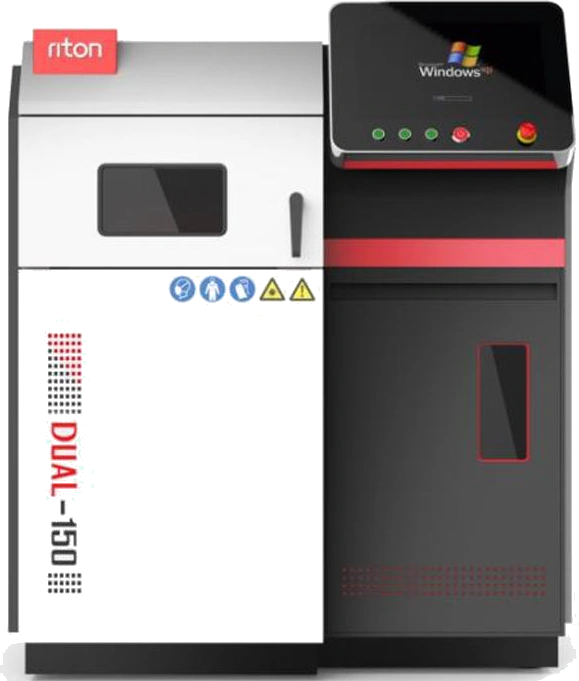
Metal is fused layer by layer in a controlled atmosphere: solid-part density, with no casting and no roughing pass.
A fibre source with galvanometer scanning at ≤ 14.000 mm/s.
Automatic job preparation and a parameter database by material.
They share the platform and cut the cycle against a single head, with the same finish.
What the manufacturer's sheet declares, unembellished.
150 × 150 × 110 mm
20 – 50 µm
The Dual-150 ships with Riton 3D's preparation and control software: it lays out the parts and works out the paths automatically, with a database of validated parameters by material, and logs every print.
The materials the manufacturer declares for the Dual-150.
From the single crown to the implant bar.
The printer is one part of the workflow. This is what goes with it in a lab that produces.
Makes the process gas on site, with no dependence on cylinders.
Collects the metal powder with the safety a reactive material demands.
Recovers unfused powder and returns it to the cycle, graded.
Relieves stress and gives the material its final properties.
Separates the parts from the base plate once the print is done.
Key technical data for the Riton 3D Dual-150.
Data from the manufacturer's spec sheet. Subject to change without notice.
We will help you size the installation, the process gas and the ancillary equipment before you buy.